
RS-1
A monitoring system for industrial equipment that learns what normal looks like for each machine, then warns you when the readings start drifting toward a failure.
The problem
Most plants find out a pump or compressor is failing when it fails. Fixed alarm thresholds either fire constantly or too late, because a healthy reading on one machine is a warning sign on another. Scheduled maintenance replaces parts that were fine and misses the ones that weren't.
What RS-1 does
Each asset streams vibration, pressure and temperature. RS-1 builds a baseline for that specific machine from its own history, then watches for drift away from it. When something trends toward failure it pushes a notification with the signal, the trend and how far it has moved, so the fix happens on your schedule instead of the machine's.
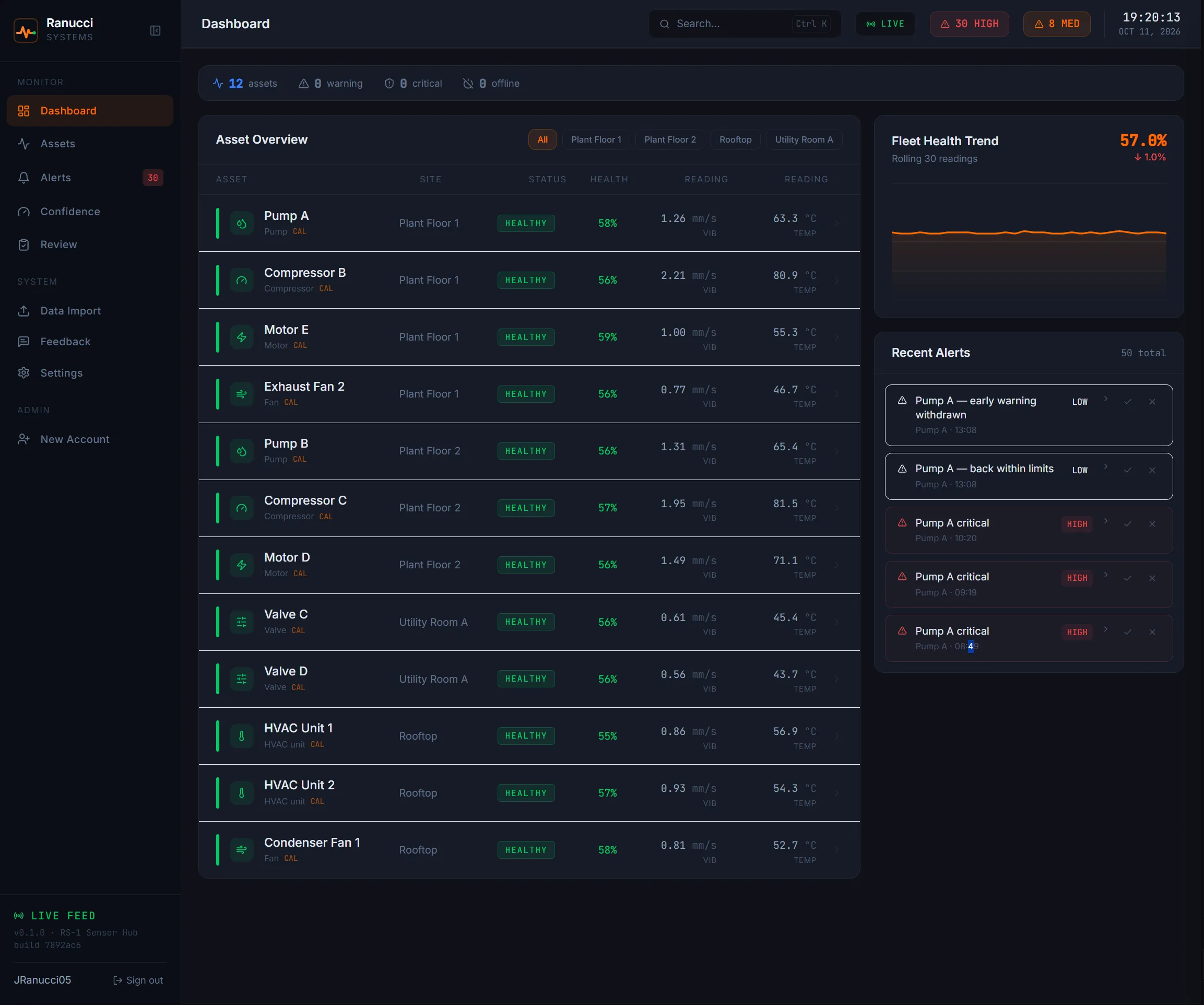
The whole plant on one screen
Every asset in the fleet with its status, health score and live vibration and temperature, filterable by site. Warning, critical and offline counts sit at the top so the first glance tells you whether today is a normal day.
Click the screenshot to view it full size.
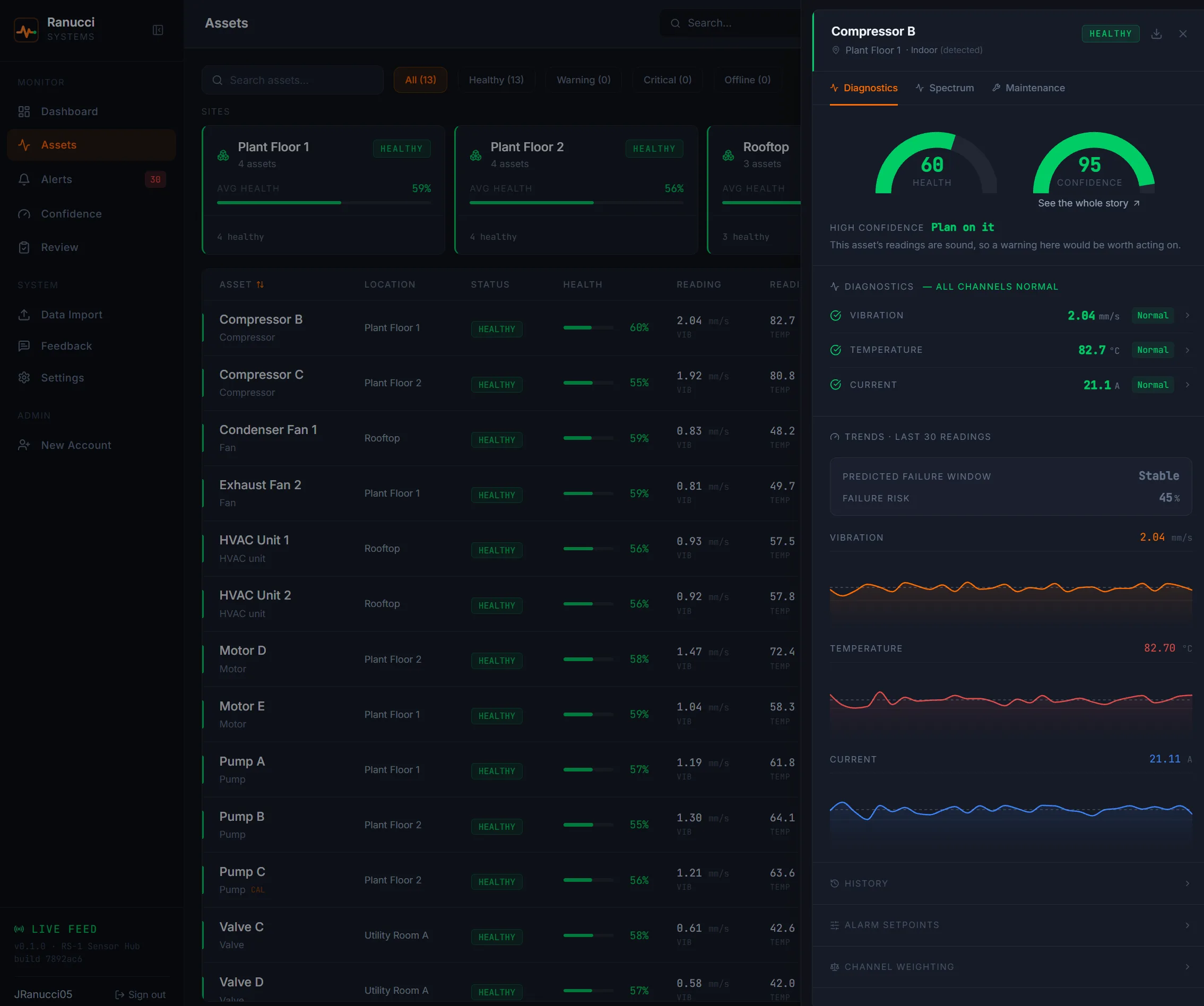
Every machine gets its own normal
Click into an asset and you get its three live channels against its own learned baseline bands, a predicted failure window, and a failure-risk figure. A reading that would be alarming on one unit is correctly ignored on another, because the limits came from that machine's history, not a global setting.
Click the screenshot to view it full size.
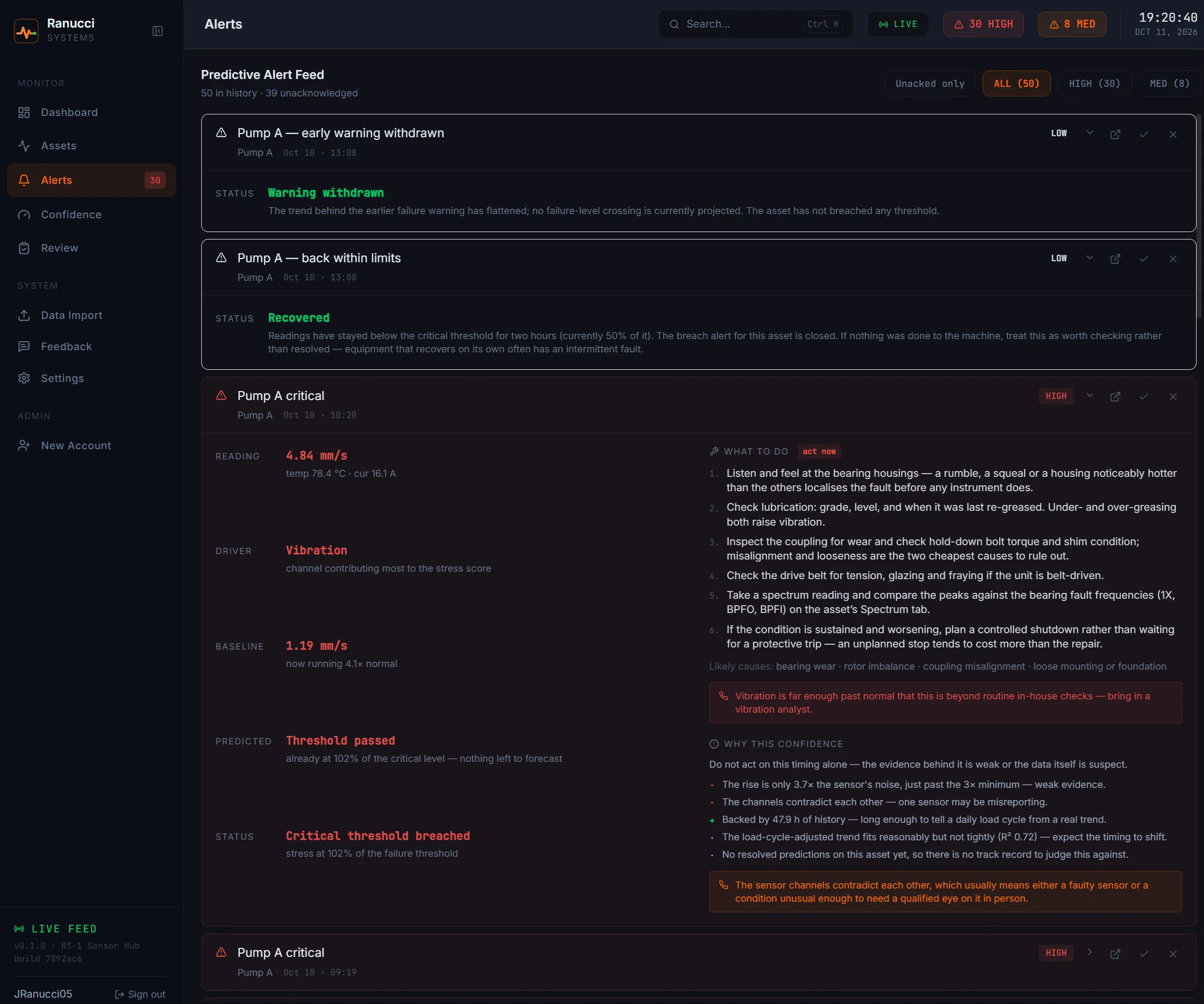
Alerts that tell you what to do
A critical alert shows the reading, the driving channel, the baseline it broke and how far past it the machine is. Then a numbered checklist of what to check first, the likely causes, and when to stop and bring in a specialist, so a shift lead can act without waiting for an engineer.
Click the screenshot to view it full size.
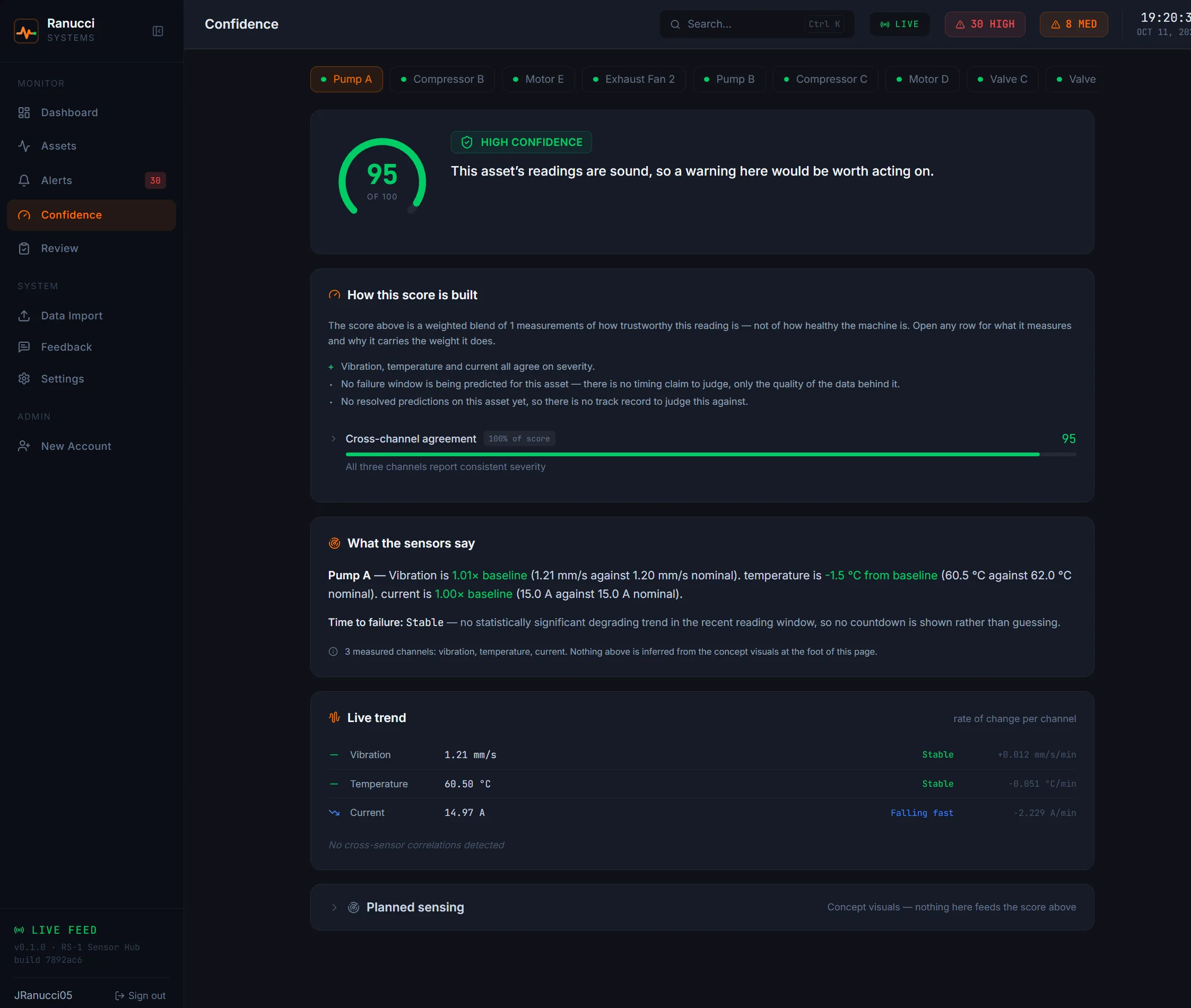
It says how much to trust it
Separate from the health score, every asset gets a confidence score for the data behind it: do the channels agree, is there enough history, how well does the trend fit. A warning on a high-confidence asset is worth acting on; a warning on a low-confidence one gets flagged as suspect data first.
Click the screenshot to view it full size.
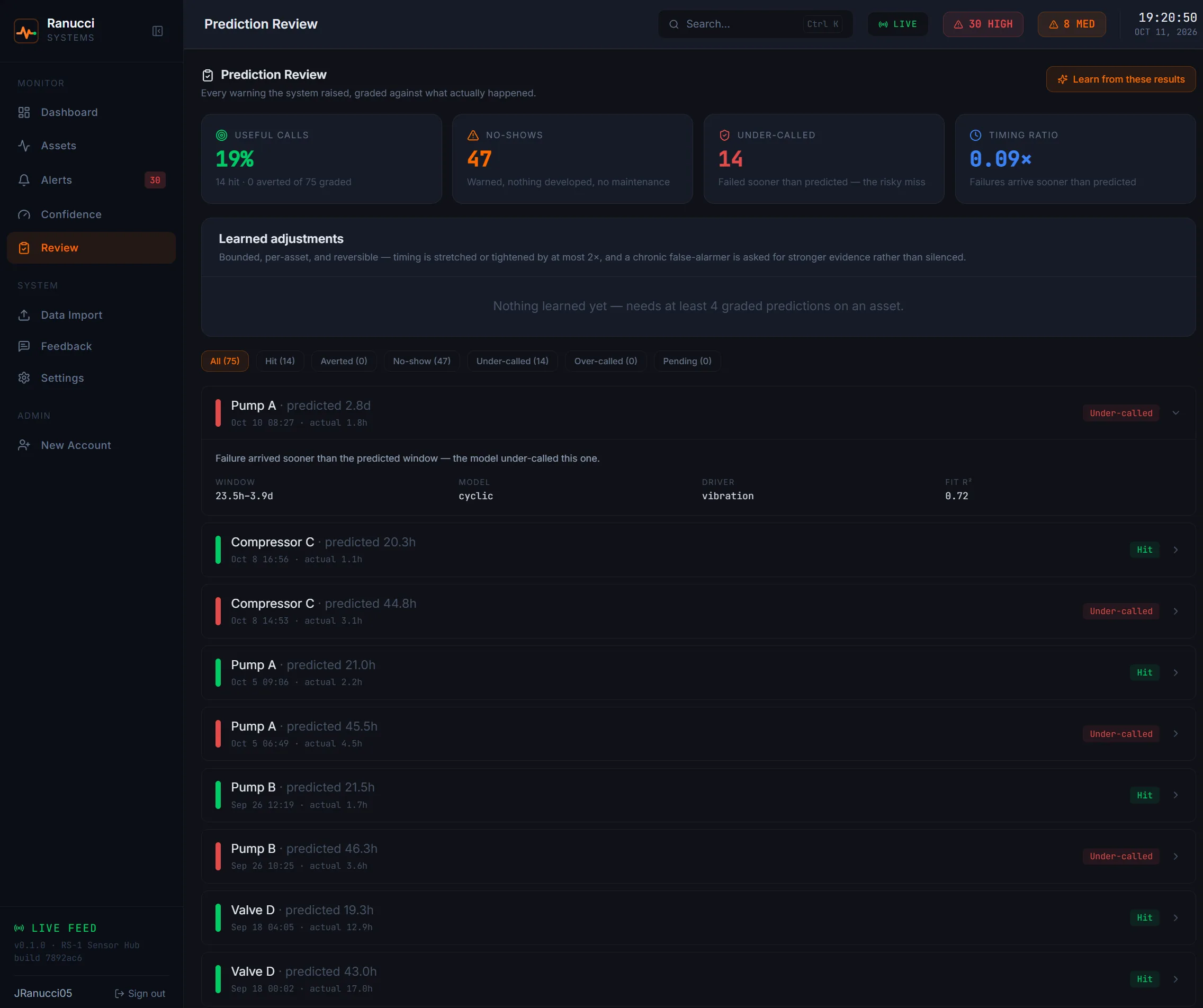
Grades its own predictions
Every warning is scored afterwards against what actually happened: hit, no-show, under-called or over-called. The review page keeps the running tally and, once an asset has enough graded calls, adjusts its timing per asset, bounded and reversible, so the system gets quieter and more accurate the longer it runs.
Click the screenshot to view it full size.
Have equipment or sensor data nobody is watching?
PLC exports, logger files, a spreadsheet someone updates by hand. If the data exists, I can build the thing that watches it for you.